
This article has been updated to reflect 2026 data and recent developments.
There has been a substantial decline in the number of children who read for pleasure in the last few years. According to recent editions of Scholastic’s Kids & Family Reading Report, reading for fun has declined over the past several years. Today, only about half of children in the United States report enjoying reading for fun. A full 37% of children like to read “a little,” while 12% report not liking reading at all.
When it comes to reading, kids can come up with a million excuses as to why they don’t like it. It’s boring. There isn’t enough time. It isn’t fun. There’s already too much reading in school.
Thankfully, there is an art to promoting reading. Some methods, like nagging, definitely do not work. Yet other methods, such as modeling reading behaviors to your child, will pay dividends in the short and long term.
What NOT To Do
It can be frustrating trying to get your child to read, and in those moments, it is easy to rely on unsuccessful methods for encouraging reading. Sometimes the first inclination is to nag your child into submission, or perhaps bribe them to read by offering them a reward for doing so. Unfortunately, these methods often do more harm than good. Nagging can easily wear on your child’s nerves and lead him or her to resent the fact that they are being forced to read. And while rewarding your child for reading isn’t bad in and of itself, it shouldn’t be relied upon to get your child to read. The reward for reading becomes the outside reward, rather than the experience of reading itself.
Sometimes parents can be too overzealous in their efforts to encourage reading. Getting your child to read doesn’t need to involve over-the-top overtures because then the act of reading occurs not out of your child’s desire to do so, but out of a feeling of obligation to please you. Setting unrealistic goals can also turn reading into a chore. If your child has picked up his or her first book for fun, don’t expect them to finish it over the weekend!
It is similarly important to reserve judgment regarding what your child chooses to read. While it might be your goal for your child to read To Kill a Mockingbird, reading about their favorite band in a teen magazine will also suffice. Reading is reading, and the more your child does it, the more he or she will enjoy it. And with increased enjoyment comes more frequent reading. Hiding your feelings about their reading choices and reserving judgment is paramount if your child is to develop a positive attitude about reading for fun.
This video offers some suggestions on how to encourage children to read.
Give Them Something to Read
The first step in getting your child to read more is to help them enjoy doing it. The best way to accomplish this is by providing them with something that they actually want to read. Today’s kids are more drawn to short readings, such as magazine articles or articles on websites. And that’s okay! Getting them to read, whether it’s a 500-word blog post or a 500-page classic novel, is the point.
Speaking of novels, school media centers continue to expand collections that appeal to diverse interests and reading levels, including graphic novels and culturally relevant texts. Your local public library will have an even greater selection of books that are geared specifically to certain ages, along with digital lending platforms such as ebooks and audiobooks. Getting your child to enjoy reading begins with a choice because it may take trying several books in several genres before your child finds something that really interests them. Remember as well that many readers feel that once they start a book, they have to finish it, even if it isn’t a good read. This makes reading a chore, not a fun activity! To help your child enjoy reading, remind them that it’s okay to quit a book and start again with another one. According to the National Center for Education Statistics, schools have expanded access to diverse reading materials to support engagement and literacy growth.
Use Modern Technology
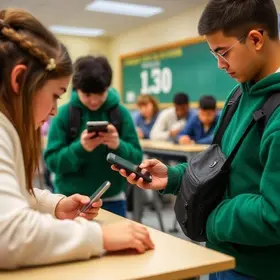
Many students today have access to tablets, e-readers, or school-issued devices, making digital reading more accessible than ever. Each of these platforms is already familiar to your child, so why not use it to promote reading for fun? Children can read articles online. Children can access books through school-supported digital libraries, reading apps, and major ebook platforms. Children can adjust the size of the font and the color of the page background to suit their preferences. They can also bookmark pages and highlight text, just like in a traditional book. A handy feature of many e-readers is an integrated dictionary, so when kids encounter words they don’t know, they can easily and quickly get a definition. There is also a wide variety of reading apps that kids can download to make their reading time an interactive and fun experience.
Be a Good Reading Model
What you do will highly influence what your child does. If you sit in front of the TV, that’s what they will want to do. Conversely, if you read for pleasure, it establishes the notion that reading is fun. In fact, research shows that children who are surrounded by readers – be that parents, siblings, friends, or teachers – are more likely to become readers themselves.
A reading routine should be established early on. Parents who read aloud to pre-linguistic children facilitate their child’s language development. Research indicates that the more words a child is exposed to as an infant, the larger their vocabulary will be at age three. Additionally, the time spent one-on-one between parent and child during reading helps children form a positive opinion about reading that will last throughout their childhood. Therefore, by establishing a routine in which reading is an essential part of the home environment, children are more likely to read for pleasure.
Get the Whole Family Involved
Fostering a love of reading can be facilitated by involving the whole family in the process. Scheduling times to read together or have individual reading time can help get your kids into the routine of picking up a book and putting down their PlayStation controller. If there are older children in the house, encouraging them to sit down and read with their younger siblings can bring benefits for them both. Playing reading-related games can be a fun way to introduce reading to children as well.
Having discussions about what you’ve read can also promote the enjoyment of reading. This doesn’t need to be a book club-type discussion; rather, asking your child what they liked best about their book, or how they felt when they read a certain passage, will get them thinking about their reading in a critical manner. Discussing it with you will also promote enhanced verbal skills, which, in turn, promote improved reading skills.
There is also an opportunity to promote learning in completing everyday tasks around the house. If your child has a question about the way you’re cooking dinner, encourage them to get online and read about it. When trying to solve a problem, such as fixing a leaky faucet, work with your kids to find a solution, and have them read the solution aloud to you. This type of engagement in reading will work at home, at the grocery store, or on the road.
This video offers seven ways to make children enjoy reading.
Conclusion
Encouraging kids to read for pleasure in 2026 requires a balanced approach that reflects modern realities. With so many distractions today, including video games, streaming platforms, and social media, a lot is competing for your child’s precious time. It is no wonder that reading risks becoming less frequent unless it is intentionally supported by families and schools. However, by using the tips described above, reading activities that make it easy and fun to read can be easily incorporated into your child’s daily schedule.