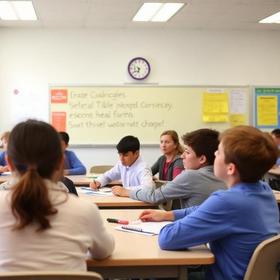

In addition to monetary donations, Bill Gates has consistently articulated his belief that improving the quality of teachers is one of the most effective ways to enhance student learning.
As The Bellingham Herald noted, researchers have long struggled to define and measure what makes a teacher truly effective. While most parents recognize the impact of a strong teacher, translating that impact into measurable data has proven difficult.
To address this challenge, the Bill and Melinda Gates Foundation committed billions of dollars to research aimed at identifying the key traits of successful educators. One major initiative, the Measures of Effective Teaching (MET) project, explored multiple evaluation methods, including classroom observations, student feedback, and academic growth metrics. A research overview of teacher effectiveness can be found at https://www.rand.org/education-employment-infrastructure/projects/measuring-teacher-effectiveness.html.
Ideas proposed and tested through these initiatives included:
- Recording and analyzing classroom instruction through video
- Using student surveys to evaluate teaching effectiveness
- Incorporating multiple measures beyond standardized test scores
- Providing targeted professional development based on feedback
These strategies have influenced how many districts approach teacher evaluation today, even as policies have evolved.
In 2026, the conversation has shifted slightly. While accountability remains important, there is increased emphasis on supporting teachers rather than strictly evaluating them. Districts are investing more in coaching, mentorship programs, and ongoing professional learning, recognizing that teacher retention is now as critical as teacher performance. For national data and trends, visit https://nces.ed.gov.
Evolving Strategies in a Changing Education Landscape
Education reform efforts backed by the Gates Foundation have not been without criticism. Some educators and policymakers argue that early initiatives placed too much emphasis on standardized testing and quantitative metrics.
In response, the foundation has adapted its strategy. Recent work focuses more on collaboration with educators, district leaders, and researchers to develop practical, classroom-based solutions. This includes funding for high-quality instructional materials and tools that help teachers tailor instruction to diverse learners.
The COVID-19 pandemic also reshaped priorities. Learning loss, mental health concerns, and technology gaps have forced districts to rethink traditional approaches. The Gates Foundation has responded by supporting research and programs aimed at accelerating learning recovery and improving digital access. Broader federal education initiatives can be explored at https://www.ed.gov.
For families exploring different educational environments, it is helpful to understand how reform efforts influence school experiences. Parents comparing options may also find value in understanding different educational models, such as those outlined in https://www.publicschoolreview.com/blog/public-school-vs-private-school and https://www.publicschoolreview.com/blog/what-is-a-charter-school, which explain key differences in school types and structures.
What This Means for Today’s Public School Students
As the Gates Foundation continues to focus on the betterment of education, school functions, and student learning, its influence can be seen in several key areas of today’s public schools:
- Greater emphasis on>Increased use of classroom observations and feedback
- Expanded professional development opportunities for teachers
- Stronger focus on equity and access to resources
At the same time, education leaders are increasingly aware that no single reform strategy can solve all challenges. Effective schools require a combination of strong leadership, community support, well-prepared teachers, and engaged students.
For parents, this means that while large-scale initiatives like those funded by the Gates Foundation play an important role, the day-to-day quality of a child’s education still depends heavily on local school leadership and classroom experiences.
Conclusion: A Lasting but Evolving Influence
Bill Gates’ impact on public education is undeniable. Through sustained investment and a willingness to tackle complex challenges, the Gates Foundation has helped shape national conversations about teaching, learning, and school improvement.
In 2026, however, the narrative is more nuanced than the original question suggests. Rather than a single “savior” of public schools, Gates is better understood as one of many influential figures contributing to ongoing reform efforts.
His work has sparked innovation, debate, and important lessons about what works and what does not work in education reform. As public schools continue to evolve, the legacy of these efforts will likely remain a key part of the conversation for years to come.