
Public schools increasingly face challenges that extend far beyond academics. Issues such as poverty, mental health needs, housing instability, and food insecurity all influence a student’s ability to learn. In response, many districts are turning to the community schools model, an approach that integrates education with social services and community partnerships.
The community schools model positions schools as neighborhood hubs where students and families can access academic support, health services, counseling, and enrichment programs. By addressing barriers to learning directly, this integrated approach aims to improve both educational outcomes and long-term community wellbeing.
As public education evolves, understanding how community schools work and the results they produce can help families and educators evaluate their potential impact.
What Is the Community Schools Model?
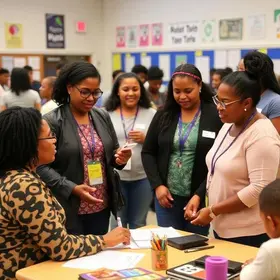
The community schools model transforms traditional public schools into collaborative centers that combine education with wraparound services and family engagement initiatives. Rather than operating as isolated academic institutions, these schools partner with nonprofits, health providers, and local agencies to meet a wide range of student needs.
According to the National Education Association, community schools are designed as neighborhood hubs where families, educators, and community members collaborate to support student success.
Core principles typically include:
• Integrated student supports
• Expanded learning opportunities
• Active family and community engagement
• Collaborative leadership and decision-making
These components allow schools to respond to local challenges while maintaining a strong academic focus.
Why Integrated Services Matter
Students cannot focus fully on learning when basic needs are unmet. The community schools model addresses this issue through coordinated services that remove barriers to academic engagement.
Common integrated services include:
| Service Area | Examples |
|---|---|
| Health Services | School-based clinics, mental health counseling |
| Family Support | Parenting workshops, social services referrals |
| Academic Support | Tutoring, after-school programs |
| Basic Needs | Food assistance, clothing programs |
These services are often delivered through partnerships with community organizations that operate directly within the school building.
This approach aligns with broader efforts to address systemic challenges affecting public education, many of which are explored in discussions such as '10 Major challenges facing public schools'.
The Growth of the Community Schools Approach
The adoption of community schools has expanded significantly across the United States in the past decade.
Recent national surveys suggest that a large share of public schools now provide some form of wraparound support. In fact, roughly 45 percent of public schools report using a community school or similar integrated services model, particularly in high-poverty areas.
This growth reflects a broader recognition that academic reforms alone are often insufficient. Schools increasingly serve as central access points for services that support the “whole child.”
Programs such as the U.S. Department of Education’s Promise Neighborhoods initiative have further reinforced this approach by funding community partnerships aimed at improving outcomes in underserved areas.
Long-Term Results and Evidence
Research on community schools consistently highlights several positive outcomes when the model is implemented effectively.
A large body of research synthesized by the Learning Policy Institute found that community schools can improve academic achievement, student engagement, and school climate, particularly for students facing socioeconomic barriers.
Long-term results often include:
Improved attendance
Integrated services help address issues such as transportation, health needs, or family stressors that can lead to chronic absenteeism.
Higher academic achievement
Access to tutoring, mentoring, and after-school programs supports stronger academic performance.
Better mental health outcomes
On-site counseling and early intervention programs help students manage stress and behavioral challenges.
Stronger family engagement
Parents become active partners in the educational process when schools provide accessible resources and community programming.
These outcomes align with broader shifts in public education toward holistic student support systems, including initiatives focused on student wellness and mental health services.
Implementation Challenges
Despite its promise, implementing a community schools model is complex.
Schools must coordinate multiple partners, secure sustainable funding, and maintain clear leadership structures. Without careful planning, programs may become fragmented or inconsistent across schools.
Common challenges include:
• Long-term funding stability
• Coordinating multiple service providers
• Measuring program impact
• Ensuring consistent community engagement
However, when districts build strong partnerships and maintain shared accountability, the model can produce lasting benefits for both students and communities.
Why the Model Matters for the Future of Public Education
Public schools increasingly operate in environments shaped by economic inequality, changing family structures, and growing student support needs. The community schools model offers a framework for addressing these realities while strengthening the role of schools within their neighborhoods.
Rather than expecting educators to solve every challenge alone, the model brings together health providers, nonprofits, government agencies, and families in a coordinated effort to support student success.
For parents evaluating schools, understanding whether a district offers integrated services may provide insight into how well it supports students both inside and outside the classroom. Tools such as national school profiles and rankings can help families explore local options and school characteristics.
Conclusion
The community schools model demonstrates how education systems can respond to the complex realities facing today’s students. By integrating social services, strengthening family engagement, and building partnerships with local organizations, schools become centers of opportunity for entire communities.
As more districts explore strategies to support the whole child, the community schools model and its integrated services framework are likely to remain an important part of the conversation about long-term success in public education.