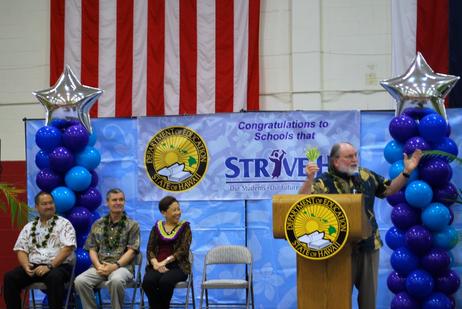
Schools in one of the largest school districts in the country recently celebrated the fruit of their labor, with cash that can be used to further improvements at high-achieving schools. The Hawaii State Department of Education distributed grant funding to deserving schools that showed marked improvement and academic progress. The grants were originally offered under the Strive HI awards initiative, supported in part by federal Race to the Top funding received during the Obama administration.
In 2026, Hawaii public schools continue using school improvement models focused on academic growth, student achievement, attendance, graduation rates, and college and career readiness. The state’s accountability system has evolved significantly since the original Strive HI framework, but the emphasis on rewarding measurable school progress remains. Many districts nationwide are also adopting similar strategies tied to education funding reform, expanded public school improvement strategies, and student achievement initiatives.
According to reports from the Hawaii Department of Education, schools were originally chosen for the awards based on academic progress over consecutive years, allowing hard-working schools to receive additional funding to continue improvement efforts. Award amounts ranged from $12,500 to $100,000 for the highest-performing schools throughout the islands.
“We are proud to be able to financially recognize the hard work of the teachers, students and staff of these schools,” Kathryn Matayoshi, superintendent of Hawaii schools at the time, stated in the original news release. “The Strive HI awards reflect that the department is not only focused on intervention in current priority schools but also encourages other schools across the islands to keep striving high.”
And the Winners Are…
The recipients of the $100,000 grants included:
- Hilo Intermediate School
- King Intermediate School
- Moanalua Middle School
- Halau Ku Mana Public Charter School (Oahu)
All of these schools completed restructuring provisions under the former No Child Left Behind accountability system and reached their progress benchmarks for two consecutive years.
Reports at the time noted that King Intermediate School, Hilo Intermediate School, and Moanalua Middle School showed some of the greatest improvement among schools in the state. King was subsequently removed from two-year supervision under No Child Left Behind requirements.
The principal of King Intermediate School, Sheena Alaiasa, credited students for embracing curriculum changes that contributed to the school’s improvement.
“Without your help, your support, our school wouldn’t be where it is today,” Alaiasa said. “You have studied hard; you have followed directions.”
Two schools also received grants of $50,000 for moving closer to their restructuring benchmarks. Those schools were Benjamin Parker Elementary School and Nanakuli Elementary School. Both schools received additional grant funding for improving math and reading proficiency.
Additional Grant Funding Provided
Schools also received grants under the Strive HI program if they made it into the top five percent for progress in math and reading proficiency. Schools that made the top five percent in both math and reading received $25,000. Those schools included:
- Nanakuli Elementary School
- Thomas Jefferson Elementary School (Oahu)
- King Kekaulike Elementary School (Maui)
- Kalanianaole Elementary and Intermediate School (Hawaii Island)
- Keaau High School (Hawaii Island)
This additional award for Nanakuli brought the total amount of its grant to $75,000.
Additional schools made it into the top five percent in either math or reading proficiency. Those schools included:
- Aliamanu Elementary
- Benjamin Parker Elementary
- Haaheo Elementary
- Haleiwa Elementary
- Hokulani Elementary
- James Campbell High School
- Kahakai Elementary
- Kanoelani Elementary
- Kanuikapono Learning Center Public Charter School
- Ke Kula O Ehunuikaimalino
- Keaau Middle School
- Kealakehe High School
- Kilohana Elementary
- King William Lunalilo Elementary
- Kohala High School
- Kula Kaiapuni O Anuenue
- Lanakila Elementary
- Manoa Elementary
- Maunawili Elementary
- Pahoa High & Intermediate School
- Red Hill Elementary
- William P. Jarrett Middle School
With Benjamin Parker’s additional grant funding for math proficiency, the school received total grant funding of $62,500.
Prize money was designated for further improvements at the schools. School leaders stated that much of the funding would likely support student programs, teacher training, classroom technology, science equipment, and arts education resources. Many districts across the country are making similar investments in modern classroom initiatives, student support services, and student engagement programs that support academic growth.
Recognition Ceremony Marks New Direction for Hawaii Schools
The schools receiving Strive HI awards were recognized at a ceremony held at King Intermediate School. Many state leaders attended the event, including Hawaii Governor Neil Abercrombie.
“Everyone here today represents an opportunity that has been grasped and a goal that has been obtained,” Governor Abercrombie told the crowd. “Everyone here was challenged, challenged to bring out the best that they have within themselves and have succeeded.”
Matayoshi explained that the goal of the awards was to recognize schools that may not have been fully acknowledged under older federal accountability systems focused almost entirely on standardized testing.
The federal No Child Left Behind system relied heavily on Adequate Yearly Progress, or AYP, benchmarks. Hawaii’s accountability efforts attempted to move beyond a one-size-fits-all model by recognizing schools making meaningful progress within their own communities.
“These awards signify a very significant shift in our strategic direction,” Matayoshi explained. “We’re going away from a one-size-fits-all version of success to one that really looks at the progress of each school in each community.”
Today, Hawaii continues to refine its educational accountability system under the federal Every Student Succeeds Act framework. The state now evaluates schools using a broader range of indicators, including academic growth, absenteeism, graduation rates, and college readiness measures. Guidance from the U.S. Department of Education and research from the National Center for Education Statistics continue influencing how states measure school performance and student outcomes.
The Hawaii State Department of Education remains unique as the only statewide public school district in the nation. The system serves approximately 165,000 students across hundreds of schools statewide and continues to rank among the largest public school systems in the United States.
Conclusion
The original Strive HI awards reflected a broader shift in how public schools measure success, moving beyond standardized testing alone to recognize consistent improvement, student growth, and community progress. More than a decade later, many of those same priorities remain central to school accountability systems across the country.
In 2026, Hawaii public schools continue focusing on academic growth, equity, teacher support, and long-term student success. While accountability models have evolved since the Race to the Top era, the goal remains the same: rewarding schools that demonstrate meaningful progress and creating opportunities for students to thrive academically and personally.