
Did you know that student dropout rates are still continuing to rise in some of the United States' most populated areas? According to Fox News, America's Promise Alliance reveals that in many urban areas, approximately half of public school students do not earn their high school diplomas. This report further found that 17 of the nation's 50 largest cities have graduation rates below 50 percent. Among the lowest cities are Detroit, Indianapolis, and Cleveland. In examining this crisis on a larger spectrum, only 70 percent of the United States' high school students graduate on schedule each year, and 1.2 million students opt to drop out of school each year. Although the current dropout epidemic is bleak, some school leaders have fortunately found programs to help transform their negative graduation rates. These statistics not only highlight a problem within the education system, but they also reflect broader societal challenges that impact families, communities, and the workforce. When students leave school prematurely, the consequences often extend into adulthood, affecting job prospects, earning potential, and overall quality of life.
This video reports on America's dropout epidemic.
The growing dropout rate is not a sudden issue, but rather the result of long-standing challenges within many school systems. Factors such as overcrowded classrooms, limited resources, and unequal access to quality education can all contribute to student disengagement. In addition, many students face personal struggles outside of school, including financial hardship, unstable home environments, and the need to work to support their families. These pressures can make it increasingly difficult for students to remain focused on their education, ultimately leading some to drop out before completing their high school diplomas.
Solving the Country's Educational Crisis
In response to the grim dropout statistics, the United States former Secretary of State Colin Powell stated “When more than 1 million students a year drop out of high school, it's more than a problem, it's a catastrophe.” Powell's wife, Alma Powell, further elaborated on the importance of high school education – arguing that public schools prepare individuals for higher education, new challenges, and issues that extend far beyond a classroom. Education plays a critical role in shaping not only individual futures, but also the strength and stability of society as a whole. A well-educated population is better equipped to contribute to economic growth, civic engagement, and innovation.
To address the many problems associated with this crisis, Colin and Alma Powell have created the Chair of the Alliance—an organization devoted to cutting the high school dropout rates across the country. Through the organization, the Powells and other collaborators meet with the leaders of each state and address specific struggles for individual communities. By working directly with local leaders, the organization is able to tailor solutions that meet the unique needs of each region. Alma Powell further asserts, “'We must invest in the whole child, and that means finding solutions that involve the family, the school, and the community."' This perspective emphasizes that education cannot be improved in isolation, but must involve a coordinated effort among all stakeholders.
In addition to national initiatives, many schools have begun implementing early intervention programs designed to identify students who may be at risk of dropping out. These programs often include mentoring, tutoring, and counseling services that provide students with the support they need to succeed academically and emotionally. By addressing issues early on, educators can help prevent students from falling behind and becoming disengaged from their studies.
Community Outreach and the Impact on Dropout Rates
Aligning with Alma Powell's belief in uniting a community to help solve the educational crisis, public schools across the country have developed comprehensive programs to bring dropout students back to their classrooms. These programs recognize that students are more likely to succeed when they feel supported not only by their schools, but also by their communities. Community involvement can create a sense of accountability and encouragement that motivates students to return to school and complete their education.
For example, as reported by the Des Moines Register, Des Moines public schools reported a total of 710 dropouts during the 2007-2008 semesters. However, through outreach efforts from both the public schools and community, approximately 140 students made commitments to return to school! This demonstrates that direct engagement and personal outreach can have a significant impact on student decisions. When students feel that people care about their success, they may be more willing to reconsider their choice to leave school.
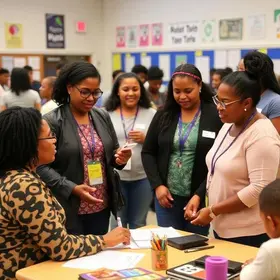
Driving this shift are various community leaders, and perhaps most notably, the United Way of Central Iowa (UWCI). The UWCI recently held a “Reach Out to Dropouts” campaign. Volunteers and organization members hosted a full community walk, where participants actively persuaded students to re-enroll in their former schools. During the walk, over 200 volunteers spoke directly with 127 dropouts and their parents. These interactions provided an opportunity to understand the reasons behind each student's decision to leave school and to offer support tailored to their individual circumstances. Of these 127 students, only 13 of the students said they would not return to school. Based on the efforts of this walk alone, 23 of the dropouts agreed to officially re-enroll, while 58 dropouts were willing to consider a potential return to school.
Remarkably, the re-enrollment began even before this large-scale community walk. Leading up to the event, volunteers and organization members actively made phone calls to speak with students who had left school, while others even made personal home visits to students during the summer. These efforts required time, dedication, and persistence, but they proved to be highly effective in reconnecting with students. As a result, 115 students re-enrolled before the day of the UWCI walk! From these community efforts, nearly 20 percent of Des Moines public school dropouts will be returning to their classrooms in the hopes of earning their diplomas.
While the UWCI efforts associated with the community walk, personal calls, and home visits have proven to be greatly effective, leaders are still working to improve the graduation and dropout rate. Other organizations and school-sponsored programs, such as the middle school alternative education center, are all part of the solution. These programs often provide alternative learning environments that better meet the needs of students who struggle in traditional settings, offering flexibility and personalized instruction.
Des Moines is just one example of how public schools are working together with their local communities to improve graduation rates. By bringing dropouts back to classrooms, communities and schools can jointly solve the crisis facing America – and prepare our country for a brighter future. Continued efforts, innovation, and collaboration will be essential in ensuring that more students have the opportunity to complete their education and pursue successful futures.