Updated
|
Chicago Schools: Discipline & Fines
The latest effort in Chicago schools to discipline student by administering monetary fines for breaking rules is highly controversial, and we’ll analyze both sides of the issue.

Most educators would agree that the proper amount of discipline is essential to a healthy learning environment. However, the means of achieving that discipline has been a debate that has raged for decades. The latest system implemented in Chicago charter schools is no exception. Students in these schools pay a hefty price – quite literally – for even the smallest infractions. And while charter school staff members believe that price has resulted in more orderly classrooms and higher student achievement, some parents and students think it borders on harassment.

The Charge for Rule-Breaking

The Noble Network of Charter Schools in Chicago has implemented a new discipline program that involves fining students for infractions of all kinds. Last year, when the system was first introduced, the Noble school system collected nearly $190,000 for rule-breaking that ranged from chewing gum to bringing a cell phone into class. The money raised went to pay for the after-school detention program and the dean of discipline position that oversees the program at all the Noble schools.

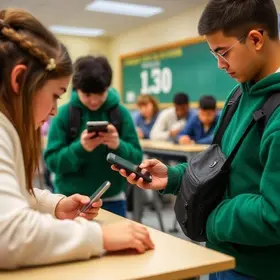
Students caught with shoes untied or shirts un-tucked, chewing gum, or using cell phones are given demerits for breaking the rules. For example, an untied shoelace is worth one demerit, while cell phone use costs four demerits. Students who receive four demerits in a two-week period are fined $5 and receive after-school detention. If a student gets a total of 12 demerits in a single school year, he must attend a behavior class over the
. . .read more

New York City Schools: Teacher Rankings Released For First Time

Updated
|
New York City Schools: Teacher Rankings Released For First Time
Explore the controversial decision by New York schools to release 15,000 teacher performance rankings to the general public this week.

After an eighteen-month court battle, the city of New York is releasing 18,000 individual teacher rankings to the media and the general public. The ratings, known as Teacher Data Reports, involve 4th through 8th-grade math and English teachers. The rankings were designed to demonstrate the progress a teacher’s students have made on state standardized tests. The results are based on data compiled since 2007, but this is the first time the information is available to those outside the school system.

Why Rank Teachers?

According to a report in the New York Times, the teacher rankings started out as a pilot program four years ago. The purpose of the program was to provide measurable data that would help improve the instruction at 140 of the city’s schools. The system was created in response to President Obama’s Race to the Top program, according to The Slatest. This federal program allows funding to states for public education, based on federal requirements to turn around low-performing schools.

The rankings have also been used by the city school districts to make decisions about teachers, such as tenure decisions and firings. The rankings were originally designed to be an objective piece of data that would help school districts distinguish between effective and ineffective teachers. The information was not originally intended to move beyond the school system, which is where the data could be used for the benefit of teachers, schools, and students.

This video reports on ranking

. . .read more

New Utah Bill Would Offers Funding Directly to Students, Rather than Schools

Updated
|
New Utah Bill Would Offers Funding Directly to Students, Rather than Schools
A new bill introduced in the Utah senate would take student funding provided to public schools and give it directly to students – to use for public school, charter school, online school or private school. We’ll examine both sides of this heated issue.

A proposal to give state funding directly to high school students, rather than public schools, continues to be hashed out by Utah lawmakers. The bill would take per-pupil funding and put it into a savings account for the individual student, rather than sending it directly to the local school district. This money could then be used by the student to pay for public or charter school, online classes, or even courses at the college level. Like other bills touting school choice, this proposal has been met with strong opinions on both sides of the aisle.

About HB123

The new bill, dubbed HB123, is a proposal that would put money into the hands of students and their parents, rather than the school system. The bill was originally introduced by Republican state Representative John Dougall, according to the Huffington Post. Dougall believes that his bill would offer a number of advantages to Utah high school students, including the creation of more competition between schools, which could raise the bar on the quality of education in the state overall.

“Today what we have is top down funding and we know many of the challenges that come with top down funding,” Dougall told the Huffington Post. “HB123 is what I call grassroots funding where we fund the student rather than institutions.”

Dougall estimates that the current funding amount students would expect to receive from the state would be approximately $6,400 per student, per year, based on

. . .read more

No Cussing in Class: New Arizona Bill Aimed at Teachers, Not Students

Updated
|
No Cussing in Class: New Arizona Bill Aimed at Teachers, Not Students
A new bill in the Arizona State Senate could criminalize teachers who use inappropriate language in the classroom. We’ll take a look at both sides of the debate.

A new bill aimed at the Arizona senate would punish public school teachers who violated Federal Communication Commission guidelines by using profanity and obscenities in the classroom. The bill was introduced by Arizona State Senator Lori Klein, after a parent complained about a teacher who used foul language in his daughter’s class. However, not everyone is in favor of the bill; some say it is an unnecessary measure that should be handled by districts, rather than at the state level.

Origins of the Bill

According to a report at News Day, the original complaint came from Floyd Brown, a parent of a high school student and a long-time Republican strategist. Brown was responsible for the infamous “Willie Horton” ad during the 1998 presidential campaign that some thought played a major role in Michael Dukakis losing the election. Brown told News Day that his daughter, a sophomore, came home from school upset one day because one of her teachers was using the F-word in class.

Brown took the issue to school administrators, but told CBS News that the educators did not take him seriously. When his complaints went unaddressed, he pulled his daughter out of the high school, and she is now being homeschooled.

“I’m not going to subject my daughter to that kind of environment,” Brown told CBS News.

Next, Brown took his complaint about the teacher’s language to Klein, since she represented his Arizona district. Klein called the language “totally inappropriate” and told CBS that

. . .read more

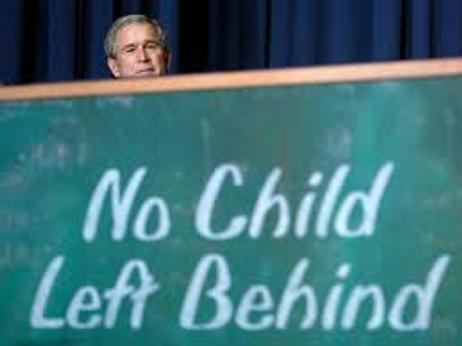
10 No Child Left Behind Waivers Given by President Obama

Updated
|
10 No Child Left Behind Waivers Given by President Obama
Learn about the 10 waivers President Obama recently offered to states in exchange for promises of upcoming improvements. This article has been updated to reflect 2026 data and recent developments

As No Child Left Behind (NCLB) deadlines approached in the early 2010s, many states recognized they would be unable to meet the law’s federal proficiency requirements within the original timeline. As a result, the Obama administration granted waivers to multiple states, allowing them to move away from the rigid requirements of NCLB. In exchange, these states committed to continuing academic improvement efforts, including updated accountability systems focused on student performance and school evaluation.

Why Waivers Were Necessary

No Child Left Behind (NCLB) was a bipartisan federal law signed in 2002 by President George W. Bush. The law aimed to ensure all students reached proficiency in math and reading by 2014, with a focus on historically underserved groups, including low-income students, minority populations, students with disabilities, and English language learners.

However, many have complained that the federal system of accountability did not allow states sufficient flexibility in developing systems that worked for their kids, and that it encouraged teachers to simply “teach to the test.” Many states are already showing signs that they will be unable to meet the federal guidelines in a timely fashion, which has prompted the request for waivers in many states. At the time, President Obama described NCLB as “an admirable but flawed effort,” highlighting widespread concerns about its implementation.

These waivers gave states greater flexibility to design accountability systems tailored to their student populations. They also allowed states to continue receiving federal funding while implementing revised accountability

. . .read more

Recent Articles

AI Report Cards: Should Schools Evaluate AI Use?
Explore whether schools should assess student AI use, the benefits, risks, and what responsible AI report cards could look like in 2026.
The Parent’s Guide to School Cell Phone Bans in 2026
Learn how school cell phone bans work in 2026, why districts are adopting them, and what parents should expect.
Parental Involvement in Public Schools: 2026 Update
Explore the latest 2026 trends, research, and strategies shaping parental involvement in public schools and student success.