Lessons

Updated
|
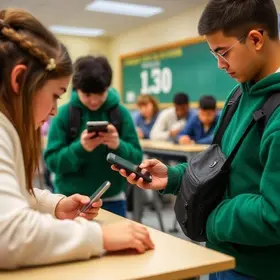
Career Readiness in Public Schools Beyond Tests
How public schools can teach career readiness skills beyond standardized tests—preparing students for real-world success.

Career Readiness in Public Schools: Teaching Skills Beyond Standardized Tests

In 2025, discussions about education reform increasingly emphasize that career readiness must extend beyond test scores if public schools are to truly prepare students for life after graduation. For many students, success hinges not only on algebra or reading skills, but also on communication, critical thinking, adaptability, and real-world problem solving. To close the “skills gap,” public schools must adopt new approaches and metrics—and equip educators, students, and communities for a future that values more than standardized test performance.

This article explores why career readiness matters, what skills matter most, how public schools can integrate them, and how to evaluate success beyond test results.

Why Move Beyond Standardized Testing?

The Limits of Tests as a Sole Metric

Standardized tests remain deeply embedded in public school accountability systems. Yet as critics and reformers note, overreliance on such tests distorts instruction, narrows curricula, and fails to reflect the full range of student readiness. Education Week The problem is not testing itself, but making tests the final arbiter of success—even when they capture only a fraction of what students must do in life or work.

The Skills Gap & Employer Expectations

Employers routinely report that recent graduates lack key “employability” or “career readiness” skills—communication, teamwork, initiative, digital literacy, self-management. icevonline.com Schools that focus narrowly on test preparation risk leaving students unprepared for their first job or further


. . .read more

Making the Most of Parent-Teacher Conferences

Updated
|
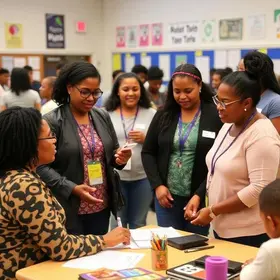
Making the Most of Parent-Teacher Conferences
A practical guide for parents and educators to maximize impact during parent-teacher conferences in 2025

Parent-Teacher Conferences: How to Make the Most of Them

Parent-teacher conferences remain one of the most vital bridges between home and school. Done well, they can foster collaboration, deepen mutual understanding, and ultimately support a student’s academic and social-emotional growth. In 2025, as more schools integrate flexible meeting formats and data tools, making the most of these conversations requires intentional planning, respectful dialogue, and follow-through. Below is a refined, actionable guide for parents, teachers, and school leaders to maximize the value of parent-teacher conferences.

Why Parent-Teacher Conferences Matter (Especially Now)

Research confirms what many educators and parents intuitively know: when families and teachers partner, outcomes improve. Students whose parents engage in regular, meaningful school communication tend to earn higher grades, be more consistent in attendance, and exhibit stronger motivation and behavior. Child Mind Institute

In recent years, educators have argued that traditional one-sided conference models limit true collaboration and often center the teacher as the sole “expert”.To counterbalance this, conference design is evolving: some schools now use academic parent-teacher teams (APTT) or small-group sessions to build shared insight, then follow up with individual meetings. talkingpts.org

Given tight schedules and multiple demands on teachers’ time, maximizing these meetings is more important than ever. Here’s how to do it right.

Before the Conference: Prepare Thoughtfully 1. Start early and coordinate schedules

Most schools schedule conferences in advance, but parents should block off time proactively.

. . .read more

Personalized Learning: Revolutionizing Education for the 21st Century

Updated
|
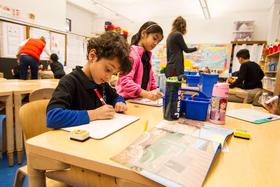
Personalized Learning: Revolutionizing Education for the 21st Century
Explore the revolutionary approach of Personalized Learning in K-12 education. This article discusses the benefits, challenges, and potential of tailoring education to individual student needs, incorporating technology and adaptive learning methods to prepare students for the 21st century.

Personalized Learning: Revolutionizing Education for the 21st Century

As a teacher, classical musician, and writer, I've always been fascinated by the art of teaching. How we educate our young people shapes not just their futures but also the very fabric of our society. That's why I'm excited to write about Personalized Learning (PL) - an approach causing quite a stir in educational circles.

Now, before you roll your eyes thinking this is just another educational fad, hear me out. Personalized Learning isn't entirely new. In fact, I think it shares a lot of DNA with Maria Montessori's "follow the child" philosophy. But what's different now is how we can implement it, thanks to the tech revolution you and I are living in.

What is Personalized Learning?

So, what exactly is Personalized Learning? In a nutshell, it's about tailoring education to each student's unique needs, skills, and interests. It's moving away from the one-size-fits-all approach that's been the norm for far too long. And let's face it, we need this change. Our current system, constricted by its rigid pacing and mandated standardized testing, is leaving too many kids behind or bored out of their minds.

The key components of Personalized Learning are pretty straightforward:

  • Individualized learning plans
  • Flexible pacing
  • Student choice
  • Data-driven instruction
  • Technology integration

It's about letting kids learn at their own pace, in ways that engage them, while using data to guide instruction. Sounds great, right?And the benefits? They're substantial. We're talking about improved student engagement (no more

. . .read more

Unlocking Academic Excellence: A Guide to Advanced Placement (AP) Courses

Updated
|
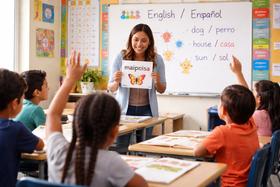
Unlocking Academic Excellence: A Guide to Advanced Placement (AP) Courses
Discover how AP courses empower students to pursue college-level studies, earn college credits, and stand out in the competitive admissions landscape.

What is AP?

AP or Advanced Placement Program is a three-year sequence of high school coursework offered by the College Board in over 34 subject areas. The idea behind offering AP courses is to provide college-bound high school seniors with a level of academic playing field. It doesn't matter whether you are a high school student in Dubuque, Iowa, or Darien, Connecticut; AP courses and the end-of-course examinations are the same wherever they are offered. The course content is the same. The teaching objectives are the same. The preparation for the final examinations is the same. Because the standard is the same everywhere and the College Board proctored and graded final examinations, college admissions professionals can compare student academic achievements with confidence. They know precisely what AP means when they see it on your transcript. They know exactly what your AP scores represent.

This brief video explains the impact of AP credit and placement.

That is the intrinsic value of AP Courses and their examinations from a college admissions point of view. Admissions professionals want to know that the math courses an applicant took at a public high school in Kansas are the same as those an applicant from a private school in Tennessee took. In other words, they want to compare apples to apples. When one applicant is offered a high school math course that is not an AP math course, the

. . .read more

Teaching: Using Virtual Reality

Updated
|
Teaching: Using Virtual Reality
Virtual Reality can enhance your lessons safely and efficiently. Virtual reality allows your students to explore worlds they might not otherwise see. We offer some suggestions on how to use VR in your classroom.

I've always been a fan of online courses. Kahn Academy and MOOC caught my attention years ago as excellent ways to enrich both my classroom lessons and my own children's learning experiences. As an old teacher, I can remember enhancing my lessons with slides and dial-up modem connections with some of the early Internet websites. I was teaching Latin to middle school students. The resources I discovered even way back in the 90s captured the imagination of my students and made the subject matter come alive. So, thirty years later, I am amazed at the breadth and depth of the resources available to parents and teachers.

The Purpose of Virtual Reality

These days, taking a class on a field trip poses all kinds of challenges. The cost, the approvals required from parents and guardians, the liability issues, and so on make school-sponsored excursions outside the school campus challenging to organize. Virtual Reality, combined with the high-resolution screens available on laptops and wide-screen TVs and monitors, is the next best thing to being there. As noted previously, it's safer and infinitely easier to manage.

How to use VR in your classroom

Finding out how to use virtual reality in your classroom involves discovering what resources are available and discussing how you may use them in your classroom.

For years, I’ve taken joy in introducing virtual reality to educators at different schools. Armed with cheap Google Cardboard viewers, Lenovo Daydream headsets, and free access to Google Expeditions and Tour Creator,

. . .read more

Recent Articles

AI Report Cards: Should Schools Evaluate AI Use?
Explore whether schools should assess student AI use, the benefits, risks, and what responsible AI report cards could look like in 2026.
The Parent’s Guide to School Cell Phone Bans in 2026
Learn how school cell phone bans work in 2026, why districts are adopting them, and what parents should expect.
Parental Involvement in Public Schools: 2026 Update
Explore the latest 2026 trends, research, and strategies shaping parental involvement in public schools and student success.