Parenting and Learning Issues

Each child learns differently. Here we offer resources on learning styles and the classroom models that support them, expert advice on how to improve learning, and tips on parental involvement.

View the most popular articles in Parenting and Learning Issues:

Going Through a Divorce? How to Ensure Your Child's Continued Success in Public Schools

Updated
|
Going Through a Divorce? How to Ensure Your Child's Continued Success in Public Schools
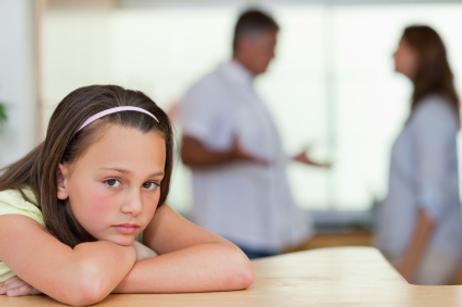
Divorce can be a traumatic experience for children, but by working closely with your children's teachers, you can help maintain their grades and positive behavior at school.

Children are often caught in the crossfire of a divorce, and separation results can wreak havoc on a child’s academic performance and behavior at school. In fact, as Planet Divorce and Parenting Wizards' expert counselor asserts, “Children exposed to divorce are twice as likely to repeat a grade and five times likelier to be expelled or suspended from school.”

Researchers have found that many children experience behavioral changes in the immediate months after a divorce. Subsequently, divorcing parents can help their children maintain their performance in public schools by understanding these issues.

This video explains how divorce impacts children's mental health.

What Happens to Children after a Divorce

In the months following a divorce, children tend to demonstrate more disobedient, less affectionate, and more demanding behaviors. As children carry their personal problems from home into their school atmosphere, some of the changes seen in their school behavior include:

  • Withdrawal
  • Dependency
  • Inattention
  • Unhappiness
  • Reduced work ethic and effort
  • Increased acts of violence
  • Physical boundary problems

Due to the dramatic upheaval in a child’s environment, divorce can impact students in an array of grade levels and at various ages.

Preventing Long-Term Problems: Public School Resources for Family Support

Studies show that over half of the reported divorces in the United States involve children and/or teens. Subsequently, Early School Years argues, “It is important to remember that divorce does affect children, and it’s

. . .read more

Cops and Children: Why Police Officers are Stationed at Elementary Schools

Updated
|
Cops and Children: Why Police Officers are Stationed at Elementary Schools
Learn about the growing trend of stationing police officers at elementary schools and the benefits of establishing a legal environment on campus at a young age.

Police officers are commonly seen in high schools and many middle schools, but is the trend now spreading to our public elementary schools? Indeed, some school and police leaders are working to increase the number of officer positions in public schools—regardless of the age range of the school’s students.

Increasing Police Presence in Public Schools

While the title “school resource officer” may sound unfamiliar to those who graduated from high school more than 10 years ago, positions for police officers in schools are quite commonplace today. As All Academic explains, School Resource Officers (SROs) have been appearing in schools across the country at steadily rising rates in recent years.

Ideally, the SROs are available to help provide leadership examples for all students on campus; however, their influence in the schools can certainly have an impact that extends beyond these intentions. SROs are usually hired and paid by the local police force (not by the local schools), and subsequently, many believe that “The presence of these officers shapes the school social climate and students’ legal socialization.”

Interestingly, however, some high schools have reported an increase in student misbehaviors after officers have been assigned to the campus. Subsequently, many elementary school leaders are experimenting with SROs in the hopes that “legal socialization” at an early age can help prevent behavior problems in the middle and high school years. These proponents believe that teaching elementary students the benefits of law enforcement professionals will translate into

. . .read more

How New Outreach Programs are Bringing Dropouts Back to Public School Classrooms

Updated
|
How New Outreach Programs are Bringing Dropouts Back to Public School Classrooms
Learn about how public schools are implementing new programs that encourage dropouts to return to the classroom.

Did you know that student dropout rates are still continuing to rise in some of the United States' most populated areas? According to Fox News, America's Promise Alliance reveals that in many urban areas, approximately half of public school students do not earn their high school diplomas. This report further found that 17 of the nation's 50 largest cities have graduation rates below 50 percent. Among the lowest cities are Detroit, Indianapolis, and Cleveland. In examining this crisis on a larger spectrum, only 70 percent of the United States' high school students graduate on schedule each year, and 1.2 million students opt to drop out of school each year. Although the current dropout epidemic is bleak, some school leaders have fortunately found programs to help transform their negative graduation rates. These statistics not only highlight a problem within the education system, but they also reflect broader societal challenges that impact families, communities, and the workforce. When students leave school prematurely, the consequences often extend into adulthood, affecting job prospects, earning potential, and overall quality of life.

This video reports on America's dropout epidemic.

The growing dropout rate is not a sudden issue, but rather the result of long-standing challenges within many school systems. Factors such as overcrowded classrooms, limited resources, and unequal access to quality education can all contribute to student disengagement. In addition, many students face personal struggles outside of

. . .read more

How “Collaborative Reasoning” Could Be the Next Public School Trend

Updated
|
How “Collaborative Reasoning” Could Be the Next Public School Trend
Collaborative reasoning, which encourages independent critical thinking, is growing in popularity amongst public schools. Learn about collaborative reasoning and how it benefits public school classrooms.

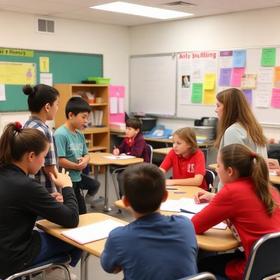
As school leaders experiment with modern educational strategies, one of the most promising programs centers on a concept known as “collaborative reasoning.” Far evolved from the archaic preconceptions of a classroom from the past, collaborative reasoning programs strive to make students active leaders in their learning communities.

Instead of having teachers solely speak and lecture, collaborative reasoning focuses on allowing children to explore using different learning and cognitive development elements. Specifically, as the Educational Psychology Review Journal explores, classrooms centered on collaborative reasoning enable teachers to act as facilitators of small student group discussions and investigations: “Collaborative reasoning discussions are intended to create a forum for children to listen to one another think out loud as they learn to engage in reasoned argumentation.”

Collaborative reasoning is designed to encourage independent critical thinking and question fellow peers and sources. Through this type of proactive learning, experts anticipate that cooperative learning can jumpstart student progress into modernity.

Traditional Learning vs. Collaborative Learning

Hoping to overcome the passive and dull methodologies of inactive classrooms, public schools across the country are embracing efforts to teach students using collaborative reasoning. Examining the need for this reform, Education Week argues, “The least effective mode of teaching and learning is still the most popular at all levels of instruction: teaching by telling, learning by parroting...When you tell it back to me the way I told it to you, I assume you have knowledge.”

Instead of demanding children to listen, memorize, and

. . .read more

Public Schools and Guest Speakers: Do Parents Have Any Input?

Updated
|
Public Schools and Guest Speakers: Do Parents Have Any Input?
Amidst the controversy surrounding President Obama's school address, learn about whether or not parents have any rights in choosing who their children's public schools invite as speakers.

This article has been updated to reflect 2026 data and recent developments.

When President Obama’s national address to students approached in September 2009, many parents expressed concerns over the potential of politically charged messages. Before his speech notes were revealed, school communities feared that Obama would try to sway students towards his political viewpoints by subtly mentioning key national issues, such as healthcare reform and economic stimulus plans. Although the speech was surrounded in controversy, in post-speech reviews, bipartisan parties generally agreed that President Obama’s lecture was non-biased and inoffensive.

Regardless, the heated debates leading to the president’s speech forced many parents and leaders to pose a question that remains relevant in 2026: Do parents have the right to deny or allow public speakers at their child’s school?

Public School Speakers: Who Chooses Them?

While public schools across the country frequently invite speakers to their campuses, some parents argue that booking these speakers without parental awareness or consent could be harmful for students, particularly amid growing debates over curriculum transparency and parental rights. For example, many conservatives, as well as individuals who oppose some of President Obama’s key political philosophies, feared that allowing their children to listen to the president’s national address in the public school setting was a violation of their parental and personal rights. Wanting to protect their children from opposing viewpoints, many parents were outraged over Obama’s public school speech, which was aired and widely viewed by public school students during regular

. . .read more

Recent Articles

Parenting and Learning Issues

IMPROVING LEARNING
A comprehensive look at the latest trends, expert advice and recent studies into improving student learning. Explore the latest studies into links between student performance, sleep and music. See why schools are opting for later start times and year round schedules.
PARENTAL INVOLVEMENT FROM K-12
Learn how direct involvement in your child’s education can impact school performance. Get expert advice on how to get involved, learn why and when you need to talk to a teacher and ways to make changes on campus.
BULLYING
An overview of bullying in schools, laws to protect students, and the impact on education. This section provides great tips on protecting your child from being bullied or becoming a bully. Learn about the latest anti-bullying laws and see how cyber-bullying effects your child’s school performance.
TYPES OF LEARNING
What type of learner is your child? Be in the know about different types of learning and which classrooms are best suited for each type. What is project-based learning? Cooperative Learning? Would your child benefit from a blended learning experience? Explore these teaching techniques and learn how they could improve your child’s performance.
KINDERGARTEN AND ELEMENTARY ISSUES
Weigh the pros and cons of preschool, full day kindergarten and other issues affecting our youngest learners. Learn what can be done to help your child prepare to enter school, boost confidence, and encourage reading at the grade school level.
HIGH SCHOOL ISSUES
Learn more about issues specific to high school students. Get an overview of high school graduation rates, college readiness, career choice and social issues impacting teenagers in public schools.