Public School Policies

From unions to vouchers, school budgets to discipline policies, we cover some of the most controversial issues affecting public schools today. Learn more about education reform and how it impacts your family. Keep current on the latest controversies regarding religion, sex-education, civil rights and more.

View the most popular articles in Public School Policies:

Banned Books Create Outcry in Arizona and Detroit

Updated
|
Banned Books Create Outcry in Arizona and Detroit
Recent bans on Shakespeare’s “The Tempest,” and newer novels “Beloved” and “Waterland” are creating an outcry among students, teachers – and the ACLU.

Book banning is an age-old concept that is nearly always met with a public outcry. That is certainly the case in two areas of the country today, where schools that have banned specific books from the classroom have been met with plenty of resistance from parents and educators. The ACLU has even involved itself in one of the situations, with a goal of protecting the civil rights of teachers and students. Is book banning appropriate in certain situations? We’ll take a look at what those involved are saying about the recent proposals to ban some pieces of literature from the classroom.

Arizona Ethnic Study Ban Includes Works by Shakespeare

Two years ago, Arizona instituted a law banning ethnic studies, a move that made headlines and ruffled many feathers in the world of education. According to a report at the Wall Street Journal, one high school teacher recently discovered that the ban includes “The Tempest” by William Shakespeare. The teacher had requested to begin teaching from the work but was told he would not be able to do so.

The now-former Arizona teacher, Curtis Acosta, wrote in a statement printed at the Wall Street Journal, “I asked if I could start teaching Shakespeare’s ‘The Tempest, and was told no, due to the themes that are present and the likelihood of avoiding discussions of colonization, enslavement, and racism were remote.”

The new Arizona law prohibits any type of course or class that “promotes the overthrow of the

. . .read more

A Relevant History of Public Education in the United States

Updated
|
A Relevant History of Public Education in the United States
By understanding the past, we can grasp a better perspective on the present and future state of education in this country.

Most Americans take the public education system in this country for granted, assuming that education for all American citizens is a right that has always been provided. However, the history of public education in the United States is one that dates back centuries, and it offers insight into the constantly evolving process of creating a learned society in this country. By understanding our roots in public education, it is easier to discuss the general purpose of public education in the broader scope of where the educational structure lies today.

Three Central Questions of Public Education

The definition of “public education” may vary, depending on the country to which you are referring. In the United States, as well as Australia and Canada, public education is defined at Education Bug as a “federally funded school, administered to some extent by the government, and charged with educating all citizens.” It refers to both primary and secondary schools, as well as some public institutions of higher education, although there is typically a cost to attend such institutions. Public schools have been present in America almost since the time the first immigrants landed on Plymouth Rock and called this country home.

Since the beginning, three core questions have evolved as the government has struggled to find the best methods for educating its citizens. According to a report at PBS.org, these questions include:

  • What is the primary purpose of public education?
  • Who should be able to receive the educational services provided to the
. . .read more

Non-Profit Organizations Now Allowed to Run Failing Schools in New Jersey

Updated
|
Non-Profit Organizations Now Allowed to Run Failing Schools in New Jersey
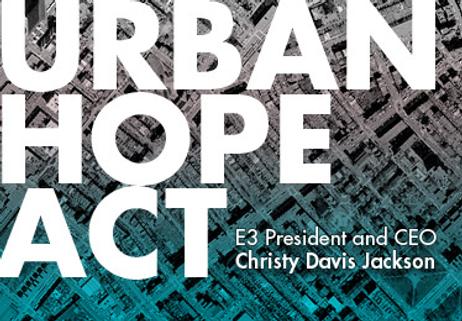
As a part of his Urban Hope Act, Governor Christie will now allow non-profit organizations to run failing schools in the state. Learn more about what this means for public schools in New Jersey.

Despite the fact that New Jersey boasts a higher per-pupil expenditure in public education than any other state in the country, many of the public schools across the state are failing to provide the quality education students need to succeed today. This is particularly true in low-income cities like Camden, Trenton and Newark, where high school graduation rates fall well below the state average. Concerned with the data coming out of his school districts, Governor Chris Christie promised to make 2011 the year of education reform. His first legislative victory to that end will go into effect in 2012, allowing non-profit organizations to construct new schools in failing areas of the state.
The Urban Hope Act

The recent bill signed by Governor Christie, known as the “Urban Hope Act,” is a 10-year pilot program that allows non-profits to build and run schools in low-income areas of the state. According to a report at Bloomberg, these schools, referred to as “renaissance schools,” will be located in the cities of Trenton, Newark and Camden – currently classified as some of the poorest cities in the country. Groups interested in taking on a school construction project may apply through local school boards first and then through the state department of education. As many as four schools in each city will be allowed.

“This is an innovative idea that allows us to partner with folks who will bring capital to the table to build these schools,”

. . .read more

Corruption Charges Filed against Five in San Diego School District Probe

Updated
|
Corruption Charges Filed against Five in San Diego School District Probe
Corruption charges involve two school district trustees, one former trustee, one former superintendent and a building contractor. Those involved accepted thousands of dollars in lavish gifts in return for building contracts from the district.
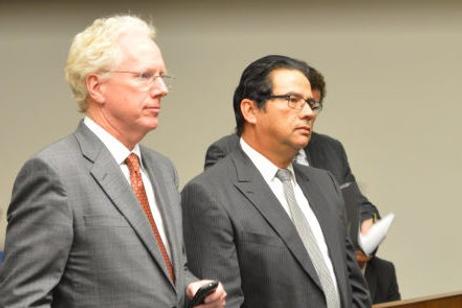
Former Sweetwater Union High School District Superintendent Jesus Gandara (left) in a corruption court hearing.

Corruption charges have been filed against four San Diego public school officials and one contractor in the largest corruption investigation in the recent history of this beach city. The investigation was prompted by allegations of bribes taken by public school trustees and one superintendent, and it uncovered widespread corruption in what the San Diego district attorney referred to as a “pay for play” culture. Current charges may not be the only ones filed, since the DA has revealed the investigation is ongoing and additional charges are possible.

Defendants Associated with San Diego Public Schools

According to a report at the Los Angeles Times, charges have been filed against Arlie Ricasa, Pearl Quinones, Greg Sandoval, Jesus Gandara, and Henry Amigable. Ricasa and Quinones are both Union High School Trustees that serve on the school board. Gandara is the former superintendent of the San Diego School District, who was fired from his post last June after receiving a $400,000 payout from the school system. Sandoval is also a former school board member. Amigable is a construction contractor, who worked for Sweetwater and Southwestern College, as well as securing contracts from the San Diego Public School system.

According to a report at Fox News, school officials charged in the probe racked up hundreds of dollars in lavish gifts provided by Amigable between 2008 and last year. Gifts included restaurant tabs, as well as airline, concert, and theatre tickets. Tickets to the Lakers’ playoff games and the Rose

. . .read more

Lawsuit Filed to Stop Student Transfers in Missouri

Updated
|
Lawsuit Filed to Stop Student Transfers in Missouri
Stay abreast of the loss of accreditation for Kansas City Schools. Now, suburban school districts are heading to court to stop student transfers to their districts until cost and eligibility issues are resolved.

When Kansas City Public Schools lost their accreditation in September, many predicted that when that decision went into effect on January 1, 2012, there would be a mass exodus of students from Kansas City Public Schools to neighboring school districts. While this prediction is shaping up to be somewhat accurate, some surrounding suburban school districts are taking measures to keep student transfers to a manageable number. For five school districts, court action may be required to ensure the changes coming to Missouri schools do not hit them where it hurts most – right in the pocketbook.

This video reports on the Kansas City Public Schools loss of accreditation in 2011.

Student Transfers: Who Pays?

Currently, Missouri law requires unaccredited districts to pay to send students to accredited districts nearby if the students request the transfer. However, according to a report in the Huffington Post, the cash-strapped Kansas City Public Schools district has admitted it cannot afford to pay for bus transportation for transfers outside the three closest school districts. The Kansas City Board of Education has not addressed the issue of tuition costs, leaving neighboring school districts wondering if they will get reimbursement for the additional students they are called upon to educate.

In addition, the district will not authorize transfers for students who have not attended a Kansas City Public School for at least two full

. . .read more

Recent Articles

AI Report Cards: Should Schools Evaluate AI Use?
Explore whether schools should assess student AI use, the benefits, risks, and what responsible AI report cards could look like in 2026.
The Parent’s Guide to School Cell Phone Bans in 2026
Learn how school cell phone bans work in 2026, why districts are adopting them, and what parents should expect.
Parental Involvement in Public Schools: 2026 Update
Explore the latest 2026 trends, research, and strategies shaping parental involvement in public schools and student success.

Public School Policies

EDUCATION REFORM
Education reform is in the works, and you can stay updated on the latest changes, debates, and policies here. Learn more about No Child Left Behind and how it impacts your child. Explore how federal and state government is working to improve school performance, student achievement and education standards.
TEACHERS AND UNIONS
A comprehensive look at teachers, tenure, and unions. Learn how unions impact school performance. Explore the impact of education reform on teaching qualification standards, traditional unions and controversial tenure rules.
PUBLIC SCHOOL BUDGETS
We offer an overview of public school budgets; where the money comes from, how it’s spent and what schools are doing to get more funding. Learn how schools are cutting budgets and how the cuts will impact your child. Delve into some of the creative ways school districts are trying to raise money and where the extra money is spent.
VOUCHERS
Explore both sides of the school voucher debate. Learn what your options are, how those choices are funded and the impact on your local school district. From the latest government initiatives to results from recent studies, explore vouchers and the options they provide.
SCHOOL DISCIPLINE POLICIES
Examine the various discipline methods being put to use in public schools. From detention to expulsion, spanking to handcuffing, school discipline can often be controversial. Does spanking work? Do police belong in schools? Learn more about what is being done to punish out of control students.
SCHOOL CONTROVERSIES
The most controversial issues impacting public school students today. From bullying to book bans, this is a comprehensive look at some of the most oft-debated issues. This section features articles on school segregation, religion, over-crowding, civil rights, and green technology.