Public School Policies

From unions to vouchers, school budgets to discipline policies, we cover some of the most controversial issues affecting public schools today. Learn more about education reform and how it impacts your family. Keep current on the latest controversies regarding religion, sex-education, civil rights and more.

View the most popular articles in Public School Policies:

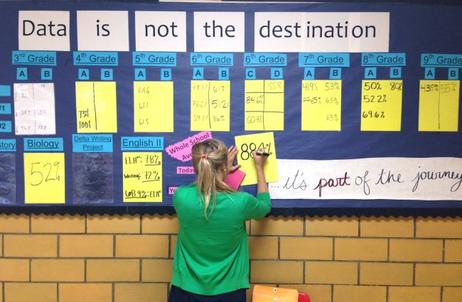
Is Teach for America the Answer for Failing Schools?

Updated
|
Is Teach for America the Answer for Failing Schools?
Teach for America has been applauded for many of its exemplary teachers and innovative training, but can the model be sustained throughout all communities? Learn about what the proponents and critics have to say.

Many schools around the country are failing to live up to academic expectations. In 2026, teacher shortages remain a major concern, especially in high-need public schools. Some districts are finding that the training of the teacher makes the difference in the quality of the education their students receive. Enter Teach For America, the education industry's equivalent of "boot camp" for aspiring teachers, providing the training and experience they need to succeed in even the most challenging academic environments.

But is Teach For America really the knight on the white horse or a way to take the community out of the education process? This article will take a look at the pros and cons of this teacher training program.

What is Teach for America?

Teach For America started as an undergraduate thesis for Wendy Kopp during her studies at Princeton University. According to the organization's website, Kopp believed numerous college students would be willing to assume teaching positions over more lucrative careers if the proper training corps was in place to prepare them.

During its inception year in 1990, Teach For America trained 500 men and women to teach in six low-income communities around the United States. Today, the organization reports a network of more than 75,000 alumni, corps members, and Ignite fellows working to advance educational access and opportunity.

The approach taken by Teach For America is to train up a corps of teachers from over-achieving college students, who make a two-year commitment
. . .read more

Local School Districts at Risk of State Government Takeovers

Updated
|
Local School Districts at Risk of State Government Takeovers
When school districts perform poorly, should the state government takeover the district’s management? Learn about some of the school districts at risk of takeovers, as well as what that truly means for students.

School districts are expected to perform at a particular level according to standards set at both the state and federal levels. When schools within that district fail to meet their expectations adequately over time, measures must be taken to ensure students get the quality of education they need to succeed. While most parents, educators, and lawmakers agree with this fundamental principle, the path to meeting those goals is often controversial. That is especially true when failing schools are met with a takeover by the state government – which is happening in many school districts today.

The Anatomy of a State Takeover

States do not take over schools overnight or because of one round of poor test scores. Many states have policies where schools cannot be touched until they have been on probation for an extended period, and their test scores have not improved significantly during that time. In most states explored in this article, school districts had as much as six years to turn around their academic achievement before the state government considered getting involved. However, even when schools have adequate time to reverse their poor performance levels, state takeovers of schools are not considered lightly, and many parents, students, educators, and lawmakers do not readily accept them.

When a state government does determine it is time to take control of a specific, low-performing school, that process can look different from state to state and even from school to school. The typical model is for the

. . .read more

Spanking in Public Schools: The Ongoing Debate

Updated
|
Spanking in Public Schools: The Ongoing Debate
Indeed, there are still school districts today in America that allow teachers to spank students. Learn about the current spanking situation in schools and why the debate continues to heat up.

Spanking is no longer allowed in many schools throughout the country. However, some school districts still allow – and practice – the act when administrators or teachers feel it is necessary to keep students in line and maintain control of the classroom. In most of those cases, students can be spanked without parental consent and under the strict guidelines of the school district. However, some parents do not feel the current policies are enough to protect their children. In some areas, spanking laws have come under fire once again, as schools are faced with the quandary of abiding by parents' wishes and keeping a disciplined classroom in order. We will look at some areas where this issue is revisited in public schools.

A Brief History of Spanking

Spanking, also known as corporal punishment, is defined on Wikipedia as

the deliberate infliction of pain as retribution for an offense, or for the purpose of disciplining or reforming a wrongdoer.

It is also used as a deterrent for unacceptable behaviors or attitudes. Spanking often involves the use of an implement, such as a belt or ruler, rather than hitting the offender with a hand.

In schools, the discipline is generally administered by a teacher or school administrator on the buttocks, using a paddle or open hand. Most schools do not require permission from the parent to perform a spanking, although some schools do send home a permission slip to parents before spanking a child who has been

. . .read more

No More Prayer at High School Graduations for Texas Schools

Updated
|
No More Prayer at High School Graduations for Texas Schools
The time has come for prayers at Texas public school graduations to say amen. Learn more about the ongoing debate regarding prayer and graduations, as well as the division between church and state.

Many high schools have traditionally included rituals like a benediction or invocation at their graduation ceremonies. While these terms might refer to a variety of things, many believe the words themselves invoke a religious ritual – one that is not allowed to be introduced or endorsed by public schools. The question of prayer during a graduation ceremony has also been a point of controversy for many years at high schools across the country. This year has been no exception, with a Texas public high school graduation coming to the forefront in the latest battle. We will take a look at the issue of prayer during graduation ceremonies, including why some believe that the practice is in direct violation of the constitutional separation of church and state.

What Happened in Texas?

Medina Valley High School in Castroville, Texas, has had a long tradition of including an invocation at the beginning of their graduation ceremonies and a benediction at the end. This year, a student at the school, along with his parents, took issue with the use of terms in the graduation ceremony that some could construe as religious. The family took their case to a district judge, who ruled that Medina was violating the constitution in using such terminology and ordered them to remove the invocation and benediction from the graduation program.

Ayesha Khan, the lawyer for the family, told Reuters, "We think that the district has been flouting the law for decades. We're glad that the

. . .read more

Marching for Schools: The Save Our Schools March Protests Education Cuts

Updated
|
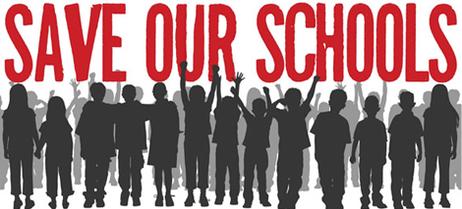
Marching for Schools: The Save Our Schools March Protests Education Cuts
Parents around the country are partaking in the Save Our Schools March to help maintain funding for our education system. Learn more about this movement and how you can get involved.

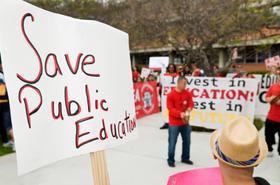
Many educators and parents are fed up with the current state of public education and have decided to take matters into their own hands. To make their voices heard in state legislatures and Washington, they have invited all disgruntled with the school system to meet together this summer in Washington, D.C. The Save Our Schools March has been gaining steam since its inception a year ago, and now many local marches are planned across the country. We'll look at the purpose of the Save Our Schools March and why so many nationwide have become frustrated enough with public education to take a public stand.

What is the Save Our Schools March?

This movement has cumulated into the Save Our Schools March and National Call to Action, which began approximately one year ago. Many parents, students, educators, and community members have become increasingly frustrated with the No Child Left Behind Act, which went into effect ten years ago, and the more recent Race to the Top initiative by the Obama Administration. According to the organization's website, this group has seen the educational system transform into one that is primarily governed by test scores rather than real instruction.

Many in this movement have taken their concerns to state politicians, and some have even gone to Capitol Hill with their issues. However, they do not feel that anyone in a position to make the necessary changes has listened to their pleas. That is when the Save Our Schools March and

. . .read more

Recent Articles

AI Report Cards: Should Schools Evaluate AI Use?
Explore whether schools should assess student AI use, the benefits, risks, and what responsible AI report cards could look like in 2026.
The Parent’s Guide to School Cell Phone Bans in 2026
Learn how school cell phone bans work in 2026, why districts are adopting them, and what parents should expect.
Parental Involvement in Public Schools: 2026 Update
Explore the latest 2026 trends, research, and strategies shaping parental involvement in public schools and student success.

Public School Policies

EDUCATION REFORM
Education reform is in the works, and you can stay updated on the latest changes, debates, and policies here. Learn more about No Child Left Behind and how it impacts your child. Explore how federal and state government is working to improve school performance, student achievement and education standards.
TEACHERS AND UNIONS
A comprehensive look at teachers, tenure, and unions. Learn how unions impact school performance. Explore the impact of education reform on teaching qualification standards, traditional unions and controversial tenure rules.
PUBLIC SCHOOL BUDGETS
We offer an overview of public school budgets; where the money comes from, how it’s spent and what schools are doing to get more funding. Learn how schools are cutting budgets and how the cuts will impact your child. Delve into some of the creative ways school districts are trying to raise money and where the extra money is spent.
VOUCHERS
Explore both sides of the school voucher debate. Learn what your options are, how those choices are funded and the impact on your local school district. From the latest government initiatives to results from recent studies, explore vouchers and the options they provide.
SCHOOL DISCIPLINE POLICIES
Examine the various discipline methods being put to use in public schools. From detention to expulsion, spanking to handcuffing, school discipline can often be controversial. Does spanking work? Do police belong in schools? Learn more about what is being done to punish out of control students.
SCHOOL CONTROVERSIES
The most controversial issues impacting public school students today. From bullying to book bans, this is a comprehensive look at some of the most oft-debated issues. This section features articles on school segregation, religion, over-crowding, civil rights, and green technology.