
Updated
|
Special Education Services in Public Schools 2026 Guide
A 2026 guide to special education services in public schools, covering IDEA rights, IEPs, 504 plans, evaluations, and parent resources.

Special Education Services in Public Schools: Rights and Resources

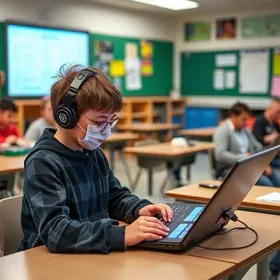
Special education services in public schools are a cornerstone of equitable education in the United States. For millions of students with disabilities, these services provide access to individualized instruction, specialized support, and legal protections that ensure meaningful educational progress.

As of 2026, more than 7.5 million students receive special education services under federal law. While the framework is well established, implementation continues to evolve through updated guidance, inclusive practices, and increased attention to mental health and learning recovery.

This updated guide explains how special education services in public schools work, outlines student rights, and provides practical resources for families navigating the process.

The Legal Foundation: IDEA and Section 504

Two primary federal laws govern special education services in public schools:

  • The Individuals with Disabilities Education Act (IDEA)

  • Section 504 of the Rehabilitation Act of 1973

IDEA guarantees eligible students a Free Appropriate Public Education, often referred to as FAPE, in the Least Restrictive Environment. The U.S. Department of Education oversees IDEA implementation nationwide. Families can review the full statute and guidance at theIndividuals with Disabilities Education Act (IDEA).

Section 504, enforced by the U.S. Department of Education’s Office for Civil Rights, protects students with disabilities from discrimination and ensures reasonable accommodations. Guidance is available through theU.S. Department of Education Office for Civil Rights.

While IDEA

. . .read more

Public School Rankings: Are They Accurate in 2026?

Updated
|
Public School Rankings: Are They Accurate in 2026?
Are public school rankings accurate? Learn how rankings are calculated in 2026, what they miss, and how families can evaluate schools wisely.

Public School Rankings: Are They Accurate?

Each year, families across the country search online for the “best” schools in their area. Public school rankings promise quick answers, sortable lists, and easy comparisons. In a few clicks, parents can view a school’s position within their state, district, or even nationwide.

But are public school rankings accurate? And more importantly, do they tell the whole story?

In 2026, ranking systems are more sophisticated than ever. They draw on standardized test scores, graduation rates, college readiness indicators, and demographic data. Yet despite increased transparency and improved methodologies, school rankings remain an imperfect tool. Understanding how they work, and what they miss, is essential for families making high-stakes decisions.

How Public School Rankings Are Calculated in 2026

Most public school rankings rely on publicly available data reported to state education agencies and the federal government. Much of this information is collected through the U.S. Department of Education’s data systems and standardized testing programs.

Today’s ranking formulas typically include:

  • Standardized test scores in math, reading, and science

  • Graduation rates

  • College readiness indicators, such as AP or IB participation

  • Student growth metrics

  • Equity measures, including subgroup performance

  • Student-to-teacher ratios

For example, organizations such as U.S. News & World Report publish annual K-12 rankings

. . .read more

How Are U.S. Public Schools Doing in 2026?

Updated
|
How Are U.S. Public Schools Doing in 2026?
A 2026 update on how U.S. public schools are performing academically, financially, and socially in a post-pandemic era.

How Are U.S. Public Schools Doing in 2026?

How are U.S. public schools doing in 2026? The answer is complex. Academic recovery continues, funding remains uneven, enrollment patterns are shifting, and political debates over curriculum and school choice remain intense.

Five years after the pandemic’s most disruptive phase, public schools are no longer in crisis mode. However, they are still navigating the long-term academic and structural consequences. Parents, educators, and policymakers are asking not just whether schools have stabilized, but whether they are improving.

This 2026 update examines academic performance, enrollment trends, funding realities, student well-being, and what lies ahead for the nation’s 49 million public school students.

Academic Performance: Progress With Persistent Gaps

National test data released in late 2025 show gradual improvement, though not a full return to pre-2020 levels. The National Assessment of Educational Progress reports modest gains in fourth- and eighth-grade math and reading compared to 2022 lows. However, scores remain below 2019 benchmarks in most states.

Key 2026 academic trends include:

  • Math recovery is stronger than reading recovery.

  • Early elementary grades show faster improvement than middle school.

  • Achievement gaps by income level and race remain wider than before 2020.

  • Chronic absenteeism, while declining, continues to affect learning outcomes.

Many districts are doubling down on high-dosage tutoring, extended learning time, and evidence-based literacy

. . .read more

Helping Your Child Navigate Friendship Drama at School

Updated
|
Helping Your Child Navigate Friendship Drama at School
Meta Description: Practical 2026 strategies for helping your child navigate friendship drama at school with confidence, empathy, and resilience.

Helping Your Child Navigate Friendship Drama at School

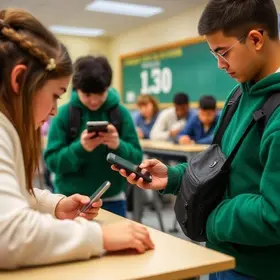
Friendship drama is not new, but in 2026, it looks different than it did a decade ago. Text threads, social media, online gaming communities, and group chats now extend school conflicts well beyond dismissal. For parents, helping your child navigate friendship drama at school requires updated strategies that reflect both in-person and digital realities.

While friendship conflicts are a normal part of development, they can deeply affect a child’s confidence, academic performance, and sense of belonging. The key is not eliminating conflict, but teaching children how to manage it with empathy, resilience, and sound judgment.

This guide offers practical, research-informed strategies for helping your child navigate friendship drama at school, whether your child is in elementary, middle, or high school.

Why Friendship Drama Feels So Intense Today

Children and teens experience social conflict more publicly than previous generations. According to the American Academy of Pediatrics, digital communication can amplify misunderstandings and intensify emotional reactions, particularly among adolescents.

Several factors contribute to heightened friendship challenges in 2026:

  • Group chats that exclude or screenshot conversations

  • Social media posts that spark comparison or jealousy

  • Rumor-spreading through short-form video platforms

  • Increased academic and extracurricular pressure

  • Post-pandemic social skill gaps still affecting some students

Schools report that while bullying

. . .read more

Raising Kind Kids: Public Schools and Empathy

Updated
|
Raising Kind Kids: Public Schools and Empathy
Discover How Public Schools Teach Empathy and Character Education through SEL, service learning, and restorative practices in 2026.

Raising Kind Kids: How Public Schools Teach Empathy and Character Education

In an era defined by rapid technological change, social media pressures, and global uncertainty, academic achievement alone is no longer enough. Parents increasingly want schools to help their children become thoughtful, ethical, and compassionate individuals. The conversation has shifted from test scores to character, from competition to collaboration.

Understanding How Public Schools Teach Empathy and Character Education is essential for families evaluating their options. Across the United States in 2026, public schools are investing in structured programs that promote emotional intelligence, civic responsibility, and ethical decision making. Far from being add-ons, these initiatives are embedded into curriculum, discipline policies, and classroom culture.

This article explores how public schools are building kinder communities and preparing students not just for college and careers, but for life.

Why Empathy and Character Education Matter in 2026

Research continues to reinforce the importance of social and emotional learning, often abbreviated as SEL. According to the Collaborative for Academic, Social, and Emotional Learning, high-quality SEL programs improve academic performance, increase positive behaviors, and reduce emotional distress.

In 2026, the emphasis has expanded. Schools are not only helping students manage emotions, but also teaching them to:

  • Understand diverse perspectives

  • Practice digital citizenship

  • Engage in constructive dialogue

  • Develop resilience and ethical reasoning

The U.S. Department of

. . .read more

Recent Articles

Preventing Suicide in Schools: 2026 Guide for Educators
Learn updated 2026 strategies for preventing suicide in schools, including warning signs, intervention plans, and school-wide mental health support.
The Impact of Social Media on Students (2026 Update)
Explore the impact of social media on students in 2026, including academic, mental health, and safety insights for parents and educators.
Building a Summer Reading Plan That Keeps Kids Engaged
Learn how to build a summer reading plan that keeps kids engaged, motivated, and improving literacy skills throughout the break.