
Top Rankings
Miller Creek Elementary School District ranks among the top 20% of public school district in California for:
Category
Attribute
Overall Rank
Highest overall rank (Top 10%)
Math Proficiency
Highest math proficiency (Top 10%)
Reading/Language Arts Proficiency
Highest reading/language arts proficiency (Top 10%)
Science Proficiency
Highest science proficiency (Top 20%)
For the 2026 school year, there are 4 public elementary schools serving 1,755 students in Miller Creek Elementary School District. This district's average elementary testing ranking is 10/10, which is in the top 10% of public elementary schools in California.
Public Elementary Schools in Miller Creek Elementary School District have an average math proficiency score of 58% (versus the California public elementary school average of 36%), and reading proficiency score of 69% (versus the 46% statewide average).
Minority enrollment is 46% of the student body (majority Hispanic), which is less than the California public elementary school average of 80% (majority Hispanic).
Overview
This School District
This State (CA)
# Schools
4 Schools
7,677 Schools
# Students
1,755 Students
3,817,118 Students
# Teachers
81 Teachers
173,969 Teachers
Student-Teacher Ratio
22:1
22:1
Student By Grade
District Rank
Miller Creek Elementary School District, which is ranked #158 of all 1,904 school districts in California (based off of combined math and reading proficiency testing data) for the 2022-2023 school year.
Overall District Rank
#155 out of 1932 school districts
(Top 10%)
(Top 10%)
Math Test Scores (% Proficient)
58%
34%
Reading/Language Arts Test Scores (% Proficient)
69%
47%
Science Test Scores (% Proficient)
50%
29%
Students by Ethnicity:
Diversity Score
0.62
0.64
% American Indian
n/a
n/a
% Asian
6%
12%
% Hispanic
27%
56%
% Black
1%
5%
% White
55%
20%
% Hawaiian
n/a
n/a
% Two or more races
11%
7%
All Ethnic Groups
District Revenue and Spending
The revenue/student of $19,302 in this school district is less than the state median of $20,100. The school district revenue/student has grown by 33% over four school years.
The school district's spending/student of $16,093 is less than the state median of $18,511. The school district spending/student has declined by 5% over four school years.
Total Revenue
$34 MM
$116,387 MM
Spending
$28 MM
$107,188 MM
Revenue / Student
$19,302
$20,100
Spending / Student
$16,093
$18,511
Best Miller Creek Elementary School District Public Elementary Schools (2026)
School
(Math and Reading Proficiency)
(Math and Reading Proficiency)
Location
Quick Facts
Rank: #11.
Lucas Valley Elementary School
(Math: 70-74% | Reading: 65-69%)
Rank:
Rank:
9/
Top 20%10
1175 Idylberry Dr.
San Rafael, CA 94903
(415) 492-3730
San Rafael, CA 94903
(415) 492-3730
Gr: K-5 | 315 students Student-teacher ratio: 24:1 Minority enrollment: 28%
Rank: #22.
Miller Creek Middle School
(Math: 52% | Reading: 73%)
Rank:
Rank:
9/
Top 20%10
2255 Las Gallinas Ave.
San Rafael, CA 94903
(415) 492-3760
San Rafael, CA 94903
(415) 492-3760
Gr: 6-8 | 620 students Student-teacher ratio: 18:1 Minority enrollment: 45%
Rank: #33.
Vallecito Elementary School
(Math: 67% | Reading: 60-64%)
Rank:
Rank:
9/
Top 20%10
50 Nova Albion Way
San Rafael, CA 94903
(415) 492-3750
San Rafael, CA 94903
(415) 492-3750
Gr: K-5 | 408 students Student-teacher ratio: 26:1 Minority enrollment: 50%
Rank: #44.
Mary E. Silveira Elementary School
(Math: 50-54% | Reading: 60-64%)
Rank:
Rank:
9/
Top 20%10
375 Blackstone Dr.
San Rafael, CA 94903
(415) 492-3741
San Rafael, CA 94903
(415) 492-3741
Gr: K-5 | 412 students Student-teacher ratio: 24:1 Minority enrollment: 56%
Recent Articles

AI Report Cards: Should Schools Evaluate AI Use?
Explore whether schools should assess student AI use, the benefits, risks, and what responsible AI report cards could look like in 2026.

The Parent’s Guide to School Cell Phone Bans in 2026
Learn how school cell phone bans work in 2026, why districts are adopting them, and what parents should expect.
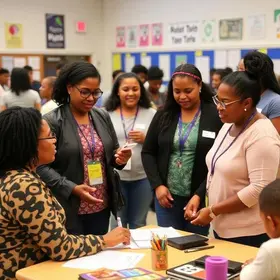
Parental Involvement in Public Schools: 2026 Update
Explore the latest 2026 trends, research, and strategies shaping parental involvement in public schools and student success.