Top Rankings
St. Peter Public School District ranks among the top 20% of public school district in Minnesota for:
Category
Attribute
Graduation Rate
Highest graduation rate (Top 10%)
Community Size
Largest student body (number of students) (Top 1%)
For the 2026 school year, there are 5 public elementary schools serving 1,340 students in St. Peter Public School District. This district's average elementary testing ranking is 7/10, which is in the top 50% of public elementary schools in Minnesota.
Public Elementary Schools in St. Peter Public School District have an average math proficiency score of 52% (versus the Minnesota public elementary school average of 47%), and reading proficiency score of 50% (versus the 51% statewide average).
Minority enrollment is 30% of the student body (majority Hispanic), which is less than the Minnesota public elementary school average of 41% (majority Black and Hispanic).
Overview
This School District
This State (MN)
# Schools
10 Schools
1,663 Schools
# Students
2,107 Students
575,552 Students
# Teachers
135 Teachers
39,750 Teachers
Student-Teacher Ratio
16:1
16:1
Student By Grade
District Rank
St. Peter Public School District, which is ranked within the top 50% of all 515 school districts in Minnesota (based off of combined math and reading proficiency testing data) for the 2022-2023 school year.
The school district's graduation rate of 92% has increased from 90-94% over five school years.
Overall District Rank
#154 out of 525 school districts
(Top 30%)
(Top 30%)
Math Test Scores (% Proficient)
49%
46%
Reading/Language Arts Test Scores (% Proficient)
51%
51%
Science Test Scores (% Proficient)
47%
41%
Graduation Rate
92%
84%
Students by Ethnicity:
Diversity Score
0.48
0.62
% American Indian
1%
2%
% Asian
1%
7%
% Hispanic
18%
12%
% Black
6%
13%
% White
70%
59%
% Hawaiian
n/a
n/a
% Two or more races
4%
7%
All Ethnic Groups
District Revenue and Spending
The revenue/student of $16,655 in this school district is less than the state median of $17,742. The school district revenue/student has grown by 9% over four school years.
The school district's spending/student of $16,348 is less than the state median of $18,463. The school district spending/student has grown by 7% over four school years.
Total Revenue
$35 MM
$15,547 MM
Spending
$34 MM
$16,179 MM
Revenue / Student
$16,655
$17,742
Spending / Student
$16,348
$18,463
Best St. Peter Public School District Public Elementary Schools (2026)
School
(Math and Reading Proficiency)
(Math and Reading Proficiency)
Location
Quick Facts
Rank: #11.
North Elementary School
(Math: 71% | Reading: 53%)
Rank:
Rank:
8/
Top 30%10
815 N 9th St
Saint Peter, MN 56082
(507) 934-3260
Saint Peter, MN 56082
(507) 934-3260
Gr: 2-4 | 429 students Student-teacher ratio: 16:1 Minority enrollment: 27%
Rank: #22.
Oshawa Learning Academy
Alternative School
(Math: <50% | Reading: <50%)
Rank:
Rank:
7/
Top 50%10
1717 Sheppard Dr
Saint Peter, MN 56082
(507) 934-9820
Saint Peter, MN 56082
(507) 934-9820
Gr: 4-12 | 25 students Minority enrollment: 32%
Rank: #33.
Hoffman Learning Center
Alternative School
(Math: <50% | Reading: <50% )
Rank:
Rank:
6/
Top 50%10
2001 Sheppard Dr
Saint Peter, MN 56082
(507) 934-9820
Saint Peter, MN 56082
(507) 934-9820
Gr: 5-12
Rank: #44.
St. Peter Middle School
(Math: 44% | Reading: 49%)
Rank:
Rank:
5/
Bottom 50%10
100 Lincoln Dr
Saint Peter, MN 56082
(507) 934-4210
Saint Peter, MN 56082
(507) 934-4210
Gr: 5-8 | 617 students Student-teacher ratio: 18:1 Minority enrollment: 33%
Rank: n/an/a
1405 S 7th St
Saint Peter, MN 56082
(507) 934-2754
Saint Peter, MN 56082
(507) 934-2754
Gr: K-1 | 269 students Student-teacher ratio: 13:1 Minority enrollment: 29%
Recent Articles
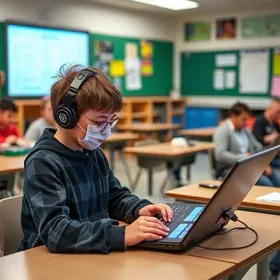
AI Report Cards: Should Schools Evaluate AI Use?
Explore whether schools should assess student AI use, the benefits, risks, and what responsible AI report cards could look like in 2026.
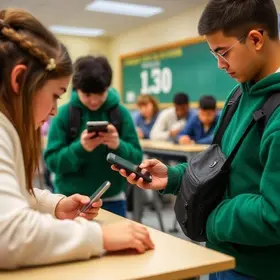
The Parent’s Guide to School Cell Phone Bans in 2026
Learn how school cell phone bans work in 2026, why districts are adopting them, and what parents should expect.
Parental Involvement in Public Schools: 2026 Update
Explore the latest 2026 trends, research, and strategies shaping parental involvement in public schools and student success.