
This article has been updated to reflect 2026 data and recent developments.
Montessori education has existed for more than a century, yet it continues to generate renewed interest as public schools search for innovative ways to improve student outcomes. Once limited largely to private institutions, Montessori programs are now increasingly found in public school systems, particularly through magnet and charter models.
This expansion comes at a time when educators are seeking alternatives to traditional instruction, especially approaches that support individualized learning, student engagement, and long-term academic growth.
As Montessori education gains traction in public settings, an important question remains: Does it deliver measurable benefits for students in today’s educational landscape?
What Is Montessori Education?
Montessori education was founded by Dr. Maria Montessori in 1907. Her approach was based on the idea that children learn best through self-directed activity in a carefully prepared environment.
In a Montessori classroom, students are encouraged to:
- Choose their own learning activities
- Work at their own pace
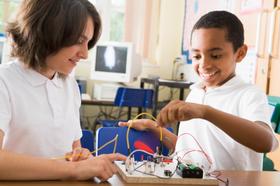
- Engage in hands-on, experiential learning
- Develop independence and responsibility
Rather than relying heavily on lectures or standardized instruction, Montessori classrooms emphasize exploration, collaboration, and real-world application.
According to the American Montessori Society, this method supports both academic development and social-emotional growth.
Key Features of Montessori Classrooms
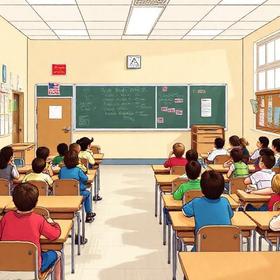
Montessori classrooms differ significantly from traditional public school environments. While implementation can vary by district, several core elements remain consistent.
Multi-Age Grouping
Students are typically grouped in multi-year age bands such as:
- Ages 3–6
- Ages 6–9
- Ages 9–12
This structure allows younger students to